Michael Kelson
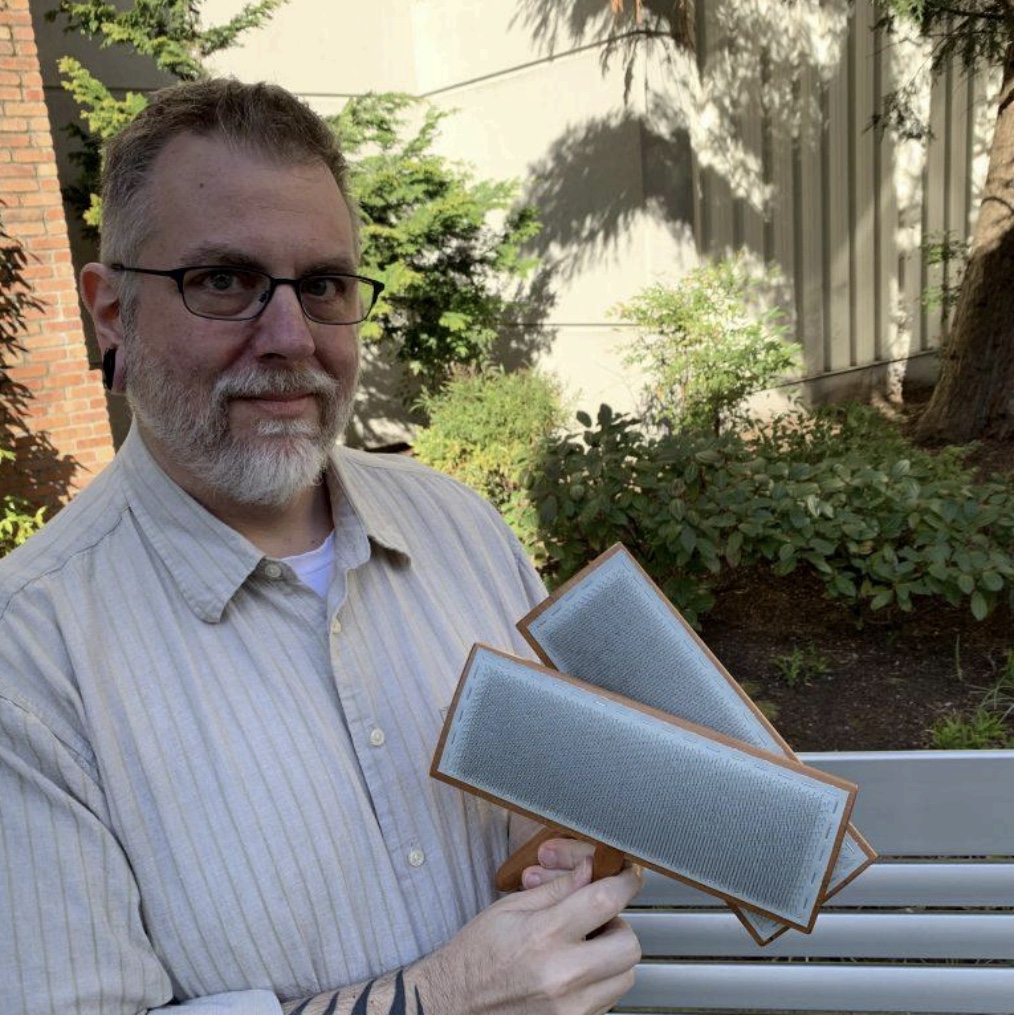
Michael Kelson (he/him/his) teaches spinning classes all over the country. His methodical, sample-based approach to spinning resonates with students of all levels. He is the coordinator for the annual Seattle-area Men’s Fall Knitting Retreat and the Seattle Men Who Knit meet-up. By day he is a software professional, but on weekends he’s usually out and about with his eSpinner in tow.
3hr class
Spinpossible: Spinning a Differential Shrinkage Boucle
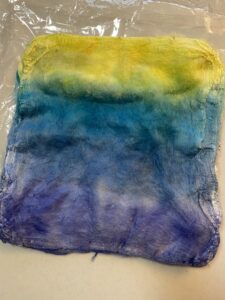
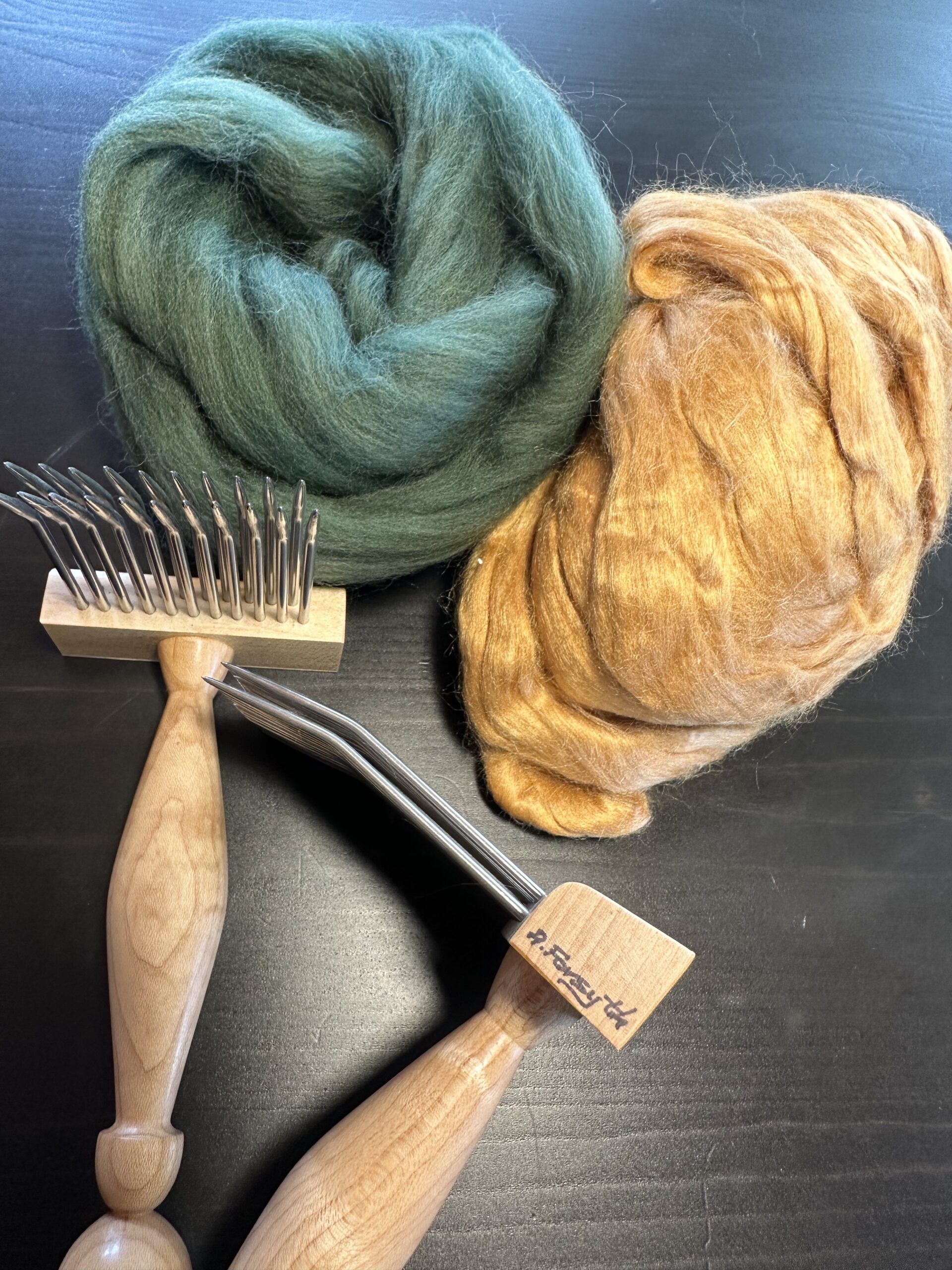
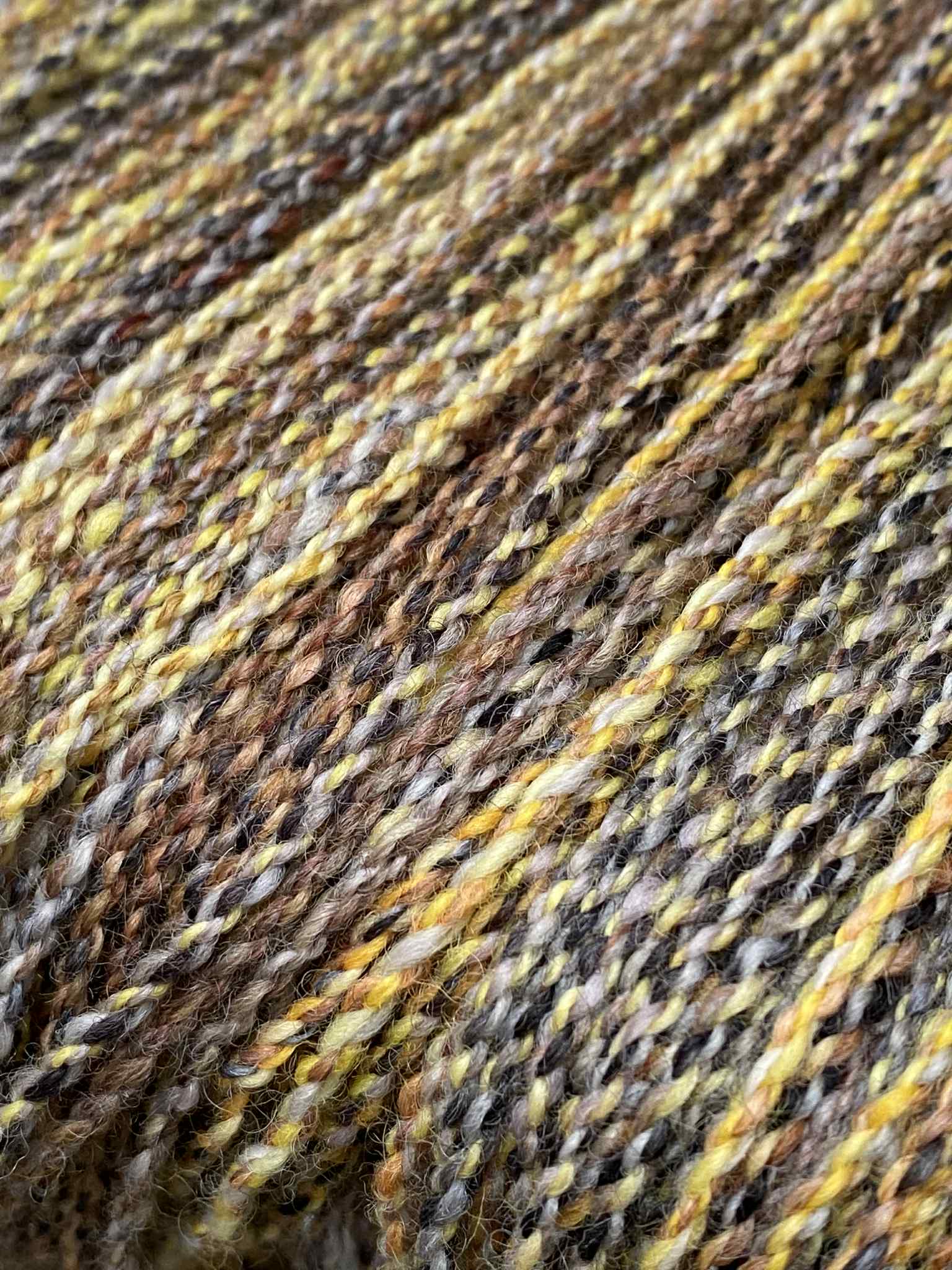
Textured, tweedy yarns are great fun to spin! Silk hankies are a great way to add a textural element to your yarn, but they can be a little challenging to work with. This class will introduce techniques for preparing mawata to spin, and using mawata as a ply with a crimpier fiber (e.g. Merino) in order to create a textured, faux bouclé yarn by taking advantage of the difference in take-up between the two fibers.
Skills you will learn:
– Working with dyed silk hankies (mawata)
Prerequisites: Successful students should have a good working relationship with their spinning wheels, be able to spin a consistent single, and have some experience plying and finishing yarn.
Bring: A spinning wheel in good working condition with extra bobbins and lazy kate. All class fiber will be provided by the instructor.
12hr Class
Spinpossible: Textured Yarn for Knitting and Weaving
Part 1 – Fundamentals Review
The first part of this class will be a short “fundamentals” review. We will discuss wheel mechanics and review different drafts and fiber preparations.
Part 2 – Core-spinning and Bouclé
Traditional bouclé yarns are spun with three plies: the core, the wrap, and the binder. This class will take you through all of the steps to create traditional corespun and bouclé yarn. We’ll explore both handspun and commercial cores and binders, and we’ll spin our own wrap singles from a variety of different fibers including mohair, silk, and a variety of longwools. We will also discuss techniques for creating textured yarns from blending different types of singles in the ply (i.e. differential shrinkage bouclé). Finally, we’ll discuss using different fibers, cores and binders to get different surfaces, loops, and textures in our
bouclés.
Part 3 – Texture with Tweed
Typical tweed yarns have inclusions which add color or textural elements to a plied yarn. This class will explore getting tweed-like effects by introducing various preparations of silk and wool inclusions when preparing fiber for spinning, while spinning singles, or in the ply.
Skills you will learn:
– Working with various silk preparations and other fibers which can be used as inclusions in plied yarn to add a textural element to your yarn
– “Frosting” your singles using small amounts of silk tops to add tweed-like color effects
– Using hand-cards to card silk or wool inclusions into your preparation. Inclusions we will explore in class will include reclaimed sari silk, sari silk thread, and silk noil, recycled wool yarns and fibers, and other interesting fibers.
Prerequisites: Successful students should have a good working relationship with their spinning wheels, be able to spin a consistent single, and have some experience plying and finishing yarn.
Bring: A spinning wheel in good working condition with extra bobbins, notebook, and lazy kate (if available). Students should bring a pair of cotton hand cards. All class fiber will be provided by the instructor, but students may bring any personal fiber they might like to practice with.